
When Pressure Goes Silent and Temperature Speaks — A Story from a Real Water Network
In theory, leak detection through pressure monitoring is one of the most basic and effective methods. But in practice — especially in real-world field conditions — the story changes completely.
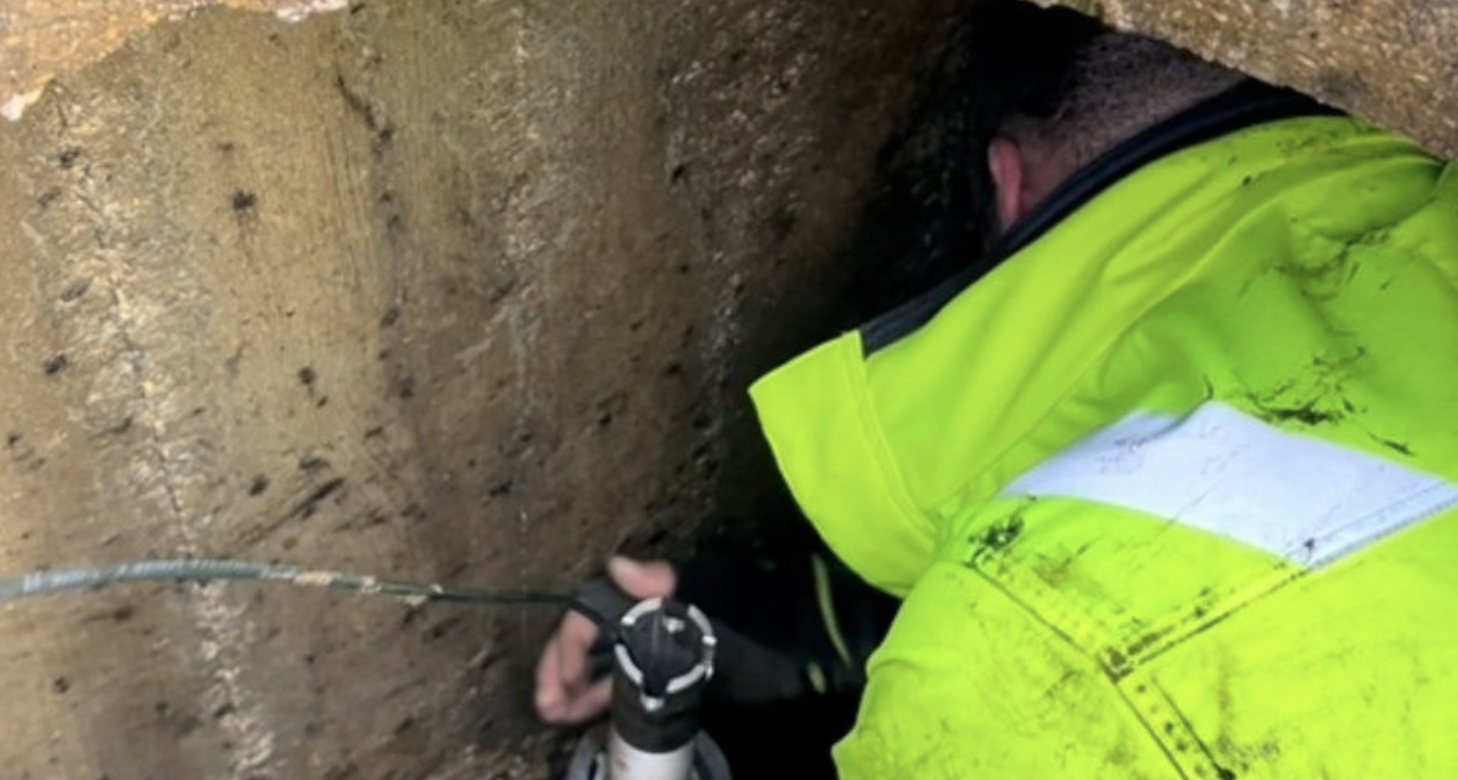
The monitoring setup
With our AQ Flow devices, we are present in over 3,000 systems across Europe, working with 150 different clients. But this is not a story about numbers. It's a story about one DN100 section, where a simple sensor revealed something big.
Monitoring configuration
- Device: AQ Flow hybrid sensor — measuring flow, pressure, and temperature simultaneously
- Location: DN100 gravity-fed pipeline, without a booster station
- Installation: Under pressure in less than 30 minutes, full manhole installation in 4 hours
- Data interval: Every 15 minutes — enabling battery life of over 6 years
- Data capture: Logs every pulse — even with rare data storage, the pattern remains complete
The event: flow jumps 5x, pressure barely moves
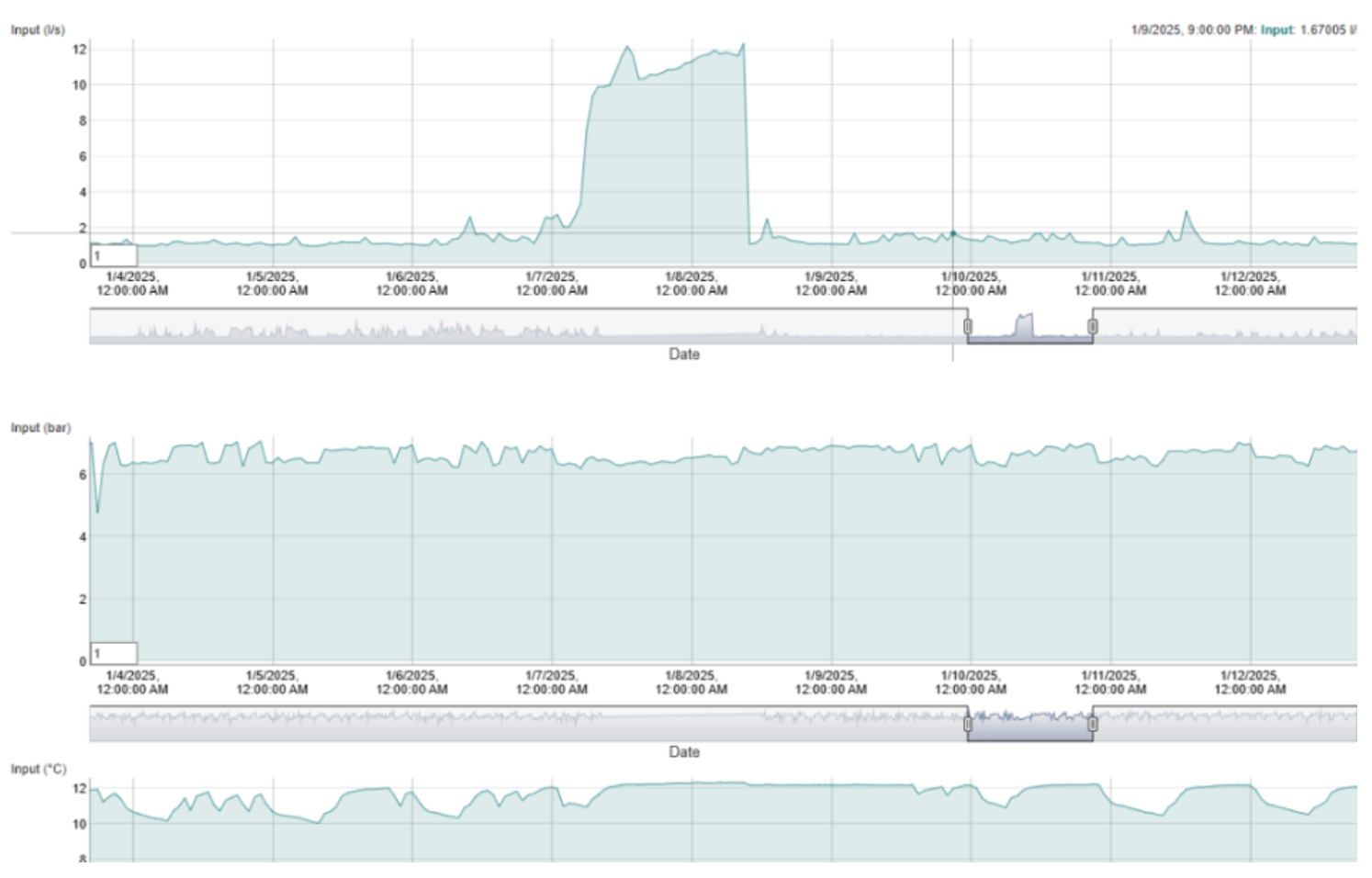
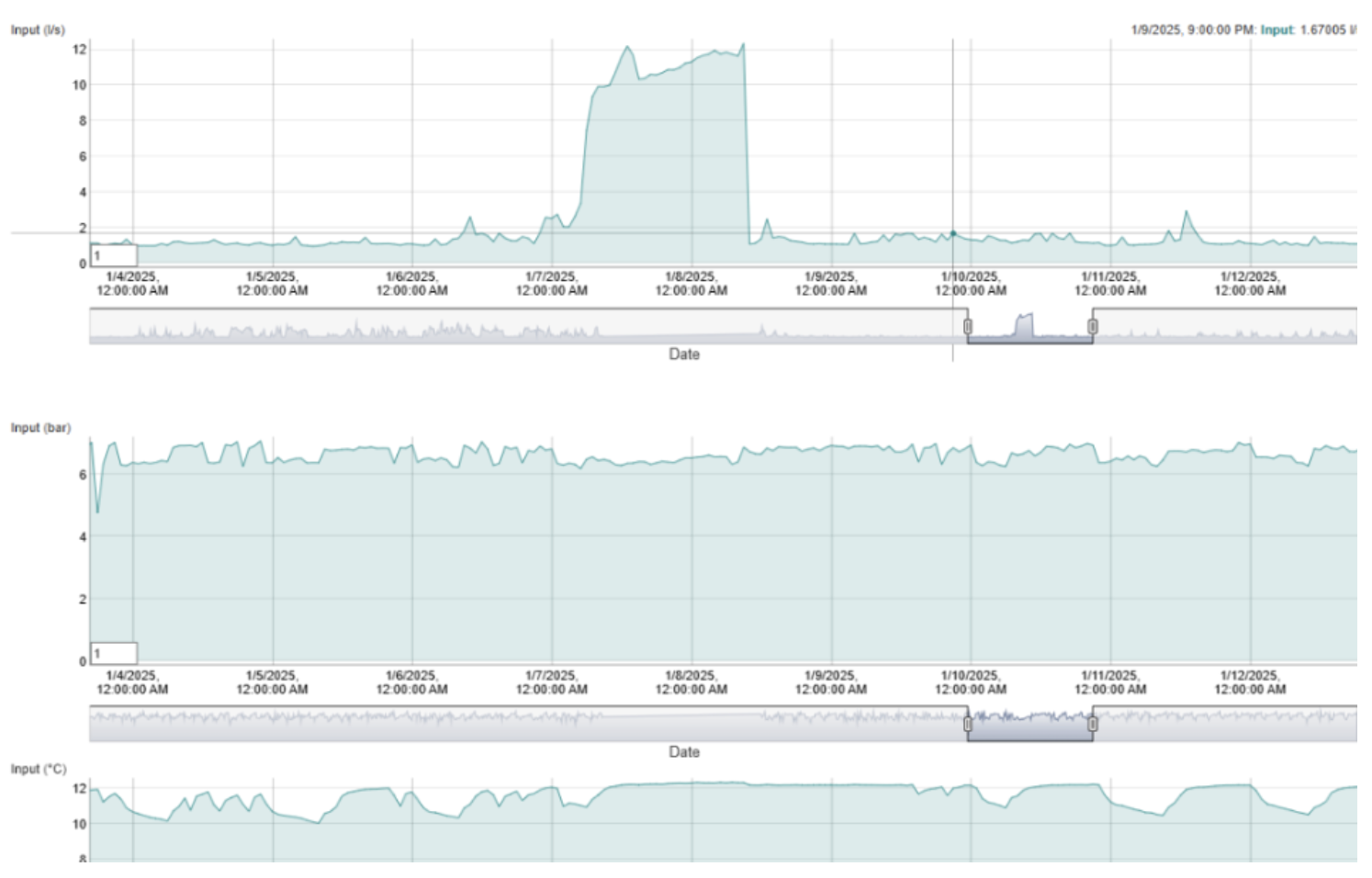
Between January 7 and 8, 2025, the flow jumped from the average of approximately 2 l/s to over 10 l/s, and stayed there for nearly 24 hours.
| Parameter | Before event | During event | Detection? |
|---|---|---|---|
| Flow | ~2 l/s | >10 l/s | ✅ Clear spike |
| Pressure | Normal | Dropped ~0.5 bar | ❌ No alarm triggered |
| Temperature | Natural fluctuations | Flat — no variation | ✅ Thermal signature detected |
Why? Because in theory, temperature change is one of the fastest indicators of continuous flow. The water didn't warm up or cool down, because it was constantly refreshed. After the event ended, the temperature resumed its natural fluctuations.
Is pressure really enough?
Even though the event was significant, the pressure in this gravity-fed system kept recovering, making it impossible to detect a classic pressure drop. Theoretically, if we had data every second, we might have caught micro-fluctuations — but:
- It would drastically shorten battery life
- It would require higher data transmission frequency
- It's simply not feasible in conditions without electricity or strong signal coverage
❌ Pressure monitoring alone
In gravity-fed systems, pressure recovers quickly. A 0.5 bar drop may not trigger any alarm. Higher sampling drains batteries. Can miss events lasting hours.
✅ Temperature as leak indicator
When water flows continuously (leak), temperature stays flat instead of showing natural overnight fluctuations. This "thermal signature" is often more reliable than pressure in gravity-fed networks.
The science: thermal signatures in leak detection
How it works
In systems without consumption, water temperature stabilises overnight based on ambient conditions. If there's a leak or hidden withdrawal, the water keeps renewing — and the temperature stays flat. This "thermal signature" is often more reliable than pressure, especially in gravity-fed networks.
AQ Flow: a realistic compromise
The most accurate leak detection is of course possible through a combination of sectional metering, high-quality manholes, valves, and closed systems. But that's costly, difficult to install, and challenging to implement in the field.
AQ Flow as a hybrid sensor offers a realistic compromise between longevity, data usability, and installation cost — measuring flow, pressure, and temperature from a single point, installed without shutting down the pipeline.
| Feature | AQ Flow hybrid sensor |
|---|---|
| Parameters measured | Flow + pressure + temperature |
| Installation | <30 min under pressure, no shutdown |
| Full manhole setup | 4 hours |
| Data interval | Every 15 minutes |
| Battery life | 6+ years |
| Connectivity | NB-IoT / LTE / 4G |
Frequently asked questions
Detect leaks your pressure sensors miss
Talk to us about AQ Flow hybrid monitoring for your network.
Request a consultation